
Sully AI
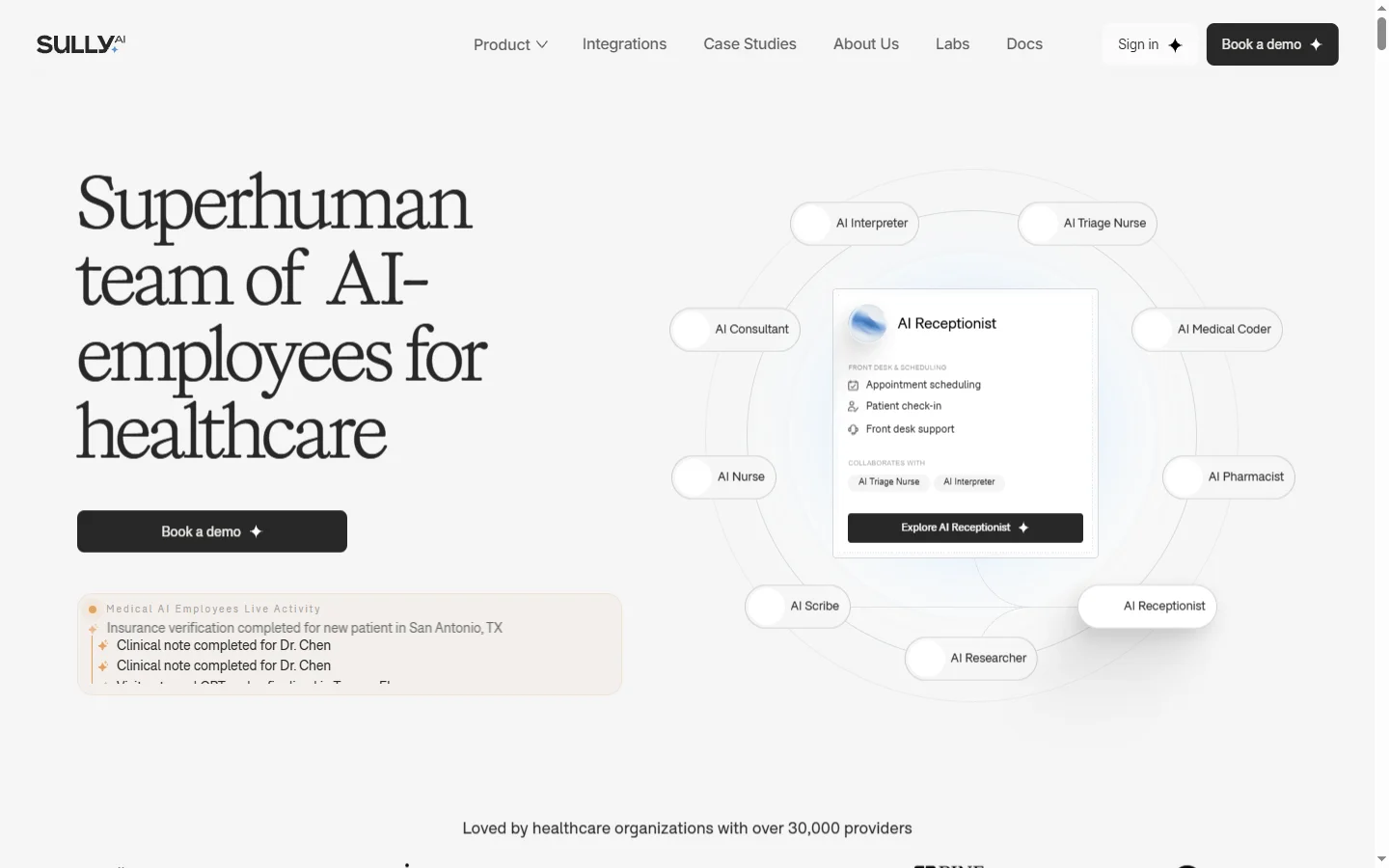
Paid ✓ VerifiedSully AI clinical platform automating physician documentation, prior authorization, and healthcare administrative workflows in real time.
📋 About Sully AI
Sully AI is a sully ai clinical AI platform designed to reduce administrative burden on physicians and healthcare teams by automating documentation, prior authorization workflows, and clinical decision support tasks within existing clinical workflows. The platform is built for healthcare organizations that want to deploy AI assistance across multiple administrative and clinical functions rather than adopting separate point solutions for each task. Sully positions itself as a comprehensive clinical AI layer that works alongside physicians rather than replacing clinical judgment.
The documentation component uses ambient listening technology to transcribe and summarize clinical encounters in real time, generating structured notes that physicians can review and approve before adding to the patient record. Prior authorization automation targets one of the most time-intensive administrative tasks in US healthcare, where physicians and staff must gather clinical evidence and submit requests to payers for treatment approval. By automating the documentation and submission components of prior auth workflows, Sully aims to reduce the hours clinical staff spend on administrative tasks that detract from patient care.
Sully AI operates on a paid model and targets health systems, hospital networks, and large group practices rather than individual clinicians. As a verified platform in the healthcare AI space, Sully maintains HIPAA compliance and appropriate data security standards for handling protected health information. The platform competes with other clinical AI tools including Suki AI and Freed in the medical documentation and workflow automation category.
⚡ Key Features of Sully AI
Ambient Clinical Documentation
Records and transcribes physician-patient encounters in real time using ambient listening technology, then generates structured clinical notes that match standard documentation formats including SOAP notes and encounter summaries. The system distinguishes between clinically relevant conversation and ambient background dialogue to produce clean documentation without irrelevant content. Generated notes are surfaced for physician review and approval before entering the patient record, keeping the clinician in control of final documentation. Real-time processing means notes are ready immediately after the encounter rather than requiring hours of post-session work.
Prior Authorization Automation
Automates the evidence gathering, form completion, and submission components of prior authorization requests to reduce the administrative time clinical staff spend on payer approval workflows. The system pulls relevant clinical documentation from the patient record to support authorization requests and formats submissions according to payer requirements. Status tracking monitors outstanding authorization requests and flags urgent cases that require follow-up. Prior auth automation targets one of the highest-burden administrative tasks in US healthcare, where manual processing can consume multiple hours per case.
Clinical Decision Support
Provides contextually relevant clinical information and evidence-based guidelines within the physician workflow based on the patient's documented conditions, medications, and encounter context. Decision support is designed to surface useful information at the point of care rather than requiring physicians to pause and search separately. Recommendations are drawn from clinical evidence sources and presented as suggestions for physician consideration, not as directives that override clinical judgment. Decision support integration with existing EHR workflows reduces the friction of accessing this information during busy clinical sessions.
EHR Integration
Integrates with major electronic health record systems so AI-generated documentation and workflow outputs connect directly to the patient record without requiring manual copying between systems. Integration covers note creation, prior authorization data, and clinical decision support surfacing within the EHR interface. Health system IT teams work with Sully during implementation to configure integration with the organization's specific EHR environment. Deep EHR integration is critical for physician adoption since tools that require context-switching outside the EHR add friction rather than reducing it.
Multi-Specialty Support
Supports documentation and workflow automation across multiple clinical specialties including primary care, specialty medicine, and surgical settings, with note templates and documentation patterns appropriate for each specialty's requirements. Multi-specialty support allows health systems to deploy Sully across diverse clinical departments rather than purchasing separate tools for each specialty. Documentation quality is optimized for the terminology, note structure, and clinical conventions specific to each supported specialty. Specialty configuration is handled during deployment setup.
HIPAA-Compliant Data Security
Processes and stores protected health information in compliance with HIPAA requirements, with appropriate encryption, access controls, audit logging, and Business Associate Agreement terms for healthcare organization deployments. Security architecture is designed to meet the standards required for handling patient data in regulated US healthcare settings. Compliance documentation is available to support health system procurement and legal review processes. As a verified platform, Sully has undergone review appropriate to its healthcare deployment context.
🎯 Use Cases for Sully AI
⚖️ Sully AI Pros & Cons
Advantages
- ✓Addresses multiple clinical workflow burdens in a single platform rather than requiring separate tools for documentation, prior auth, and decision support
- ✓Ambient documentation generates notes in real time without post-session audio submission delays
- ✓EHR integration keeps AI outputs connected directly to the patient record workflow
- ✓HIPAA compliance and verified status support healthcare procurement requirements
- ✓Multi-specialty support allows health-system-wide deployment across diverse clinical departments
Drawbacks
- ✗Paid enterprise pricing is not accessible for individual clinicians or small practices without significant budget
- ✗EHR integration implementation requires IT coordination and meaningful deployment lead time
- ✗Prior authorization automation effectiveness depends on payer-specific form and submission requirements that vary significantly
📖 How to Use Sully AI
Contact Sully AI through sully.ai to discuss deployment options, pricing, and integration requirements for your health system or practice.
Work with the Sully implementation team to configure EHR integration and specialty-specific documentation templates for your clinical environment.
Train clinical staff on the ambient documentation workflow including how to initiate recording, review generated notes, and approve documentation for the patient record.
Enable prior authorization automation by connecting the platform to your payer submission workflows and configuring relevant specialty and procedure coverage.
Activate clinical decision support within the EHR interface so relevant guidance surfaces during patient encounters without requiring separate searches.
Monitor adoption and documentation quality metrics during the initial deployment period and work with the Sully team to address any configuration or accuracy issues.
❓ Sully AI FAQ
Yes. Sully AI is designed for HIPAA-compliant deployment in US healthcare settings. It processes and stores protected health information with appropriate security controls and Business Associate Agreement terms. Compliance details should be confirmed with Sully directly as part of the procurement process.
Sully AI automates the evidence gathering, form completion, and submission components of prior authorization requests by pulling relevant clinical documentation from the patient record and formatting it according to payer requirements. This reduces the manual time clinical staff spend on each authorization case.
Sully AI integrates with major EHR platforms used in US health systems. Specific supported EHR systems and integration configurations should be confirmed with the Sully team during procurement and implementation planning.
Sully AI extends beyond ambient documentation into prior authorization automation and clinical decision support, positioning it as a broader clinical workflow platform rather than a documentation-only tool. Freed and Suki AI focus more specifically on the documentation use case. The right choice depends on whether an organization needs a single documentation tool or a more comprehensive clinical AI layer.
Yes. Sully AI supports multi-specialty deployment with documentation templates and workflow configurations appropriate for different clinical specialties. This allows health systems to roll out the platform organization-wide rather than limiting it to a single department.
Related to Sully AI


Featured on WhatIf.ai
Add this badge to your website to show you're listed on WhatIf AI
Alternatives to Sully AI

A2E AI
A2E AI productivity platform converts audio and video recordings into transcripts, summaries, and action items with speaker identification.

Abnormal AI
Abnormal AI uses behavioral AI to detect business email compromise, account takeover, and socially engineered phishing that bypasses secure email gateways.

Abridge AI
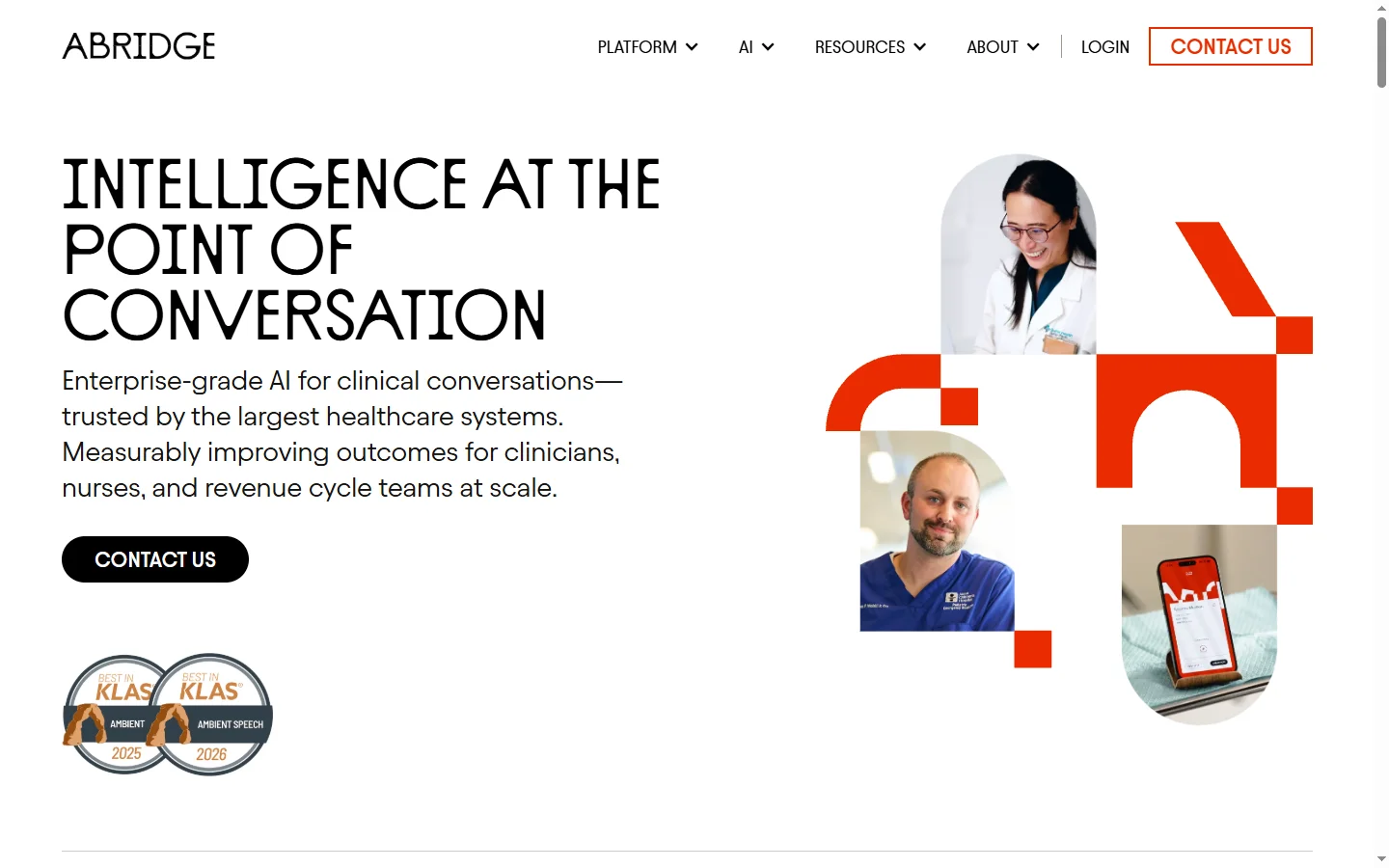
Abridge AI medical documentation platform that records and summarizes clinical conversations into structured physician notes in real time.

Air AI
Air AI conducts autonomous full-length AI phone calls for sales prospecting, appointment setting, and customer service without human agents.